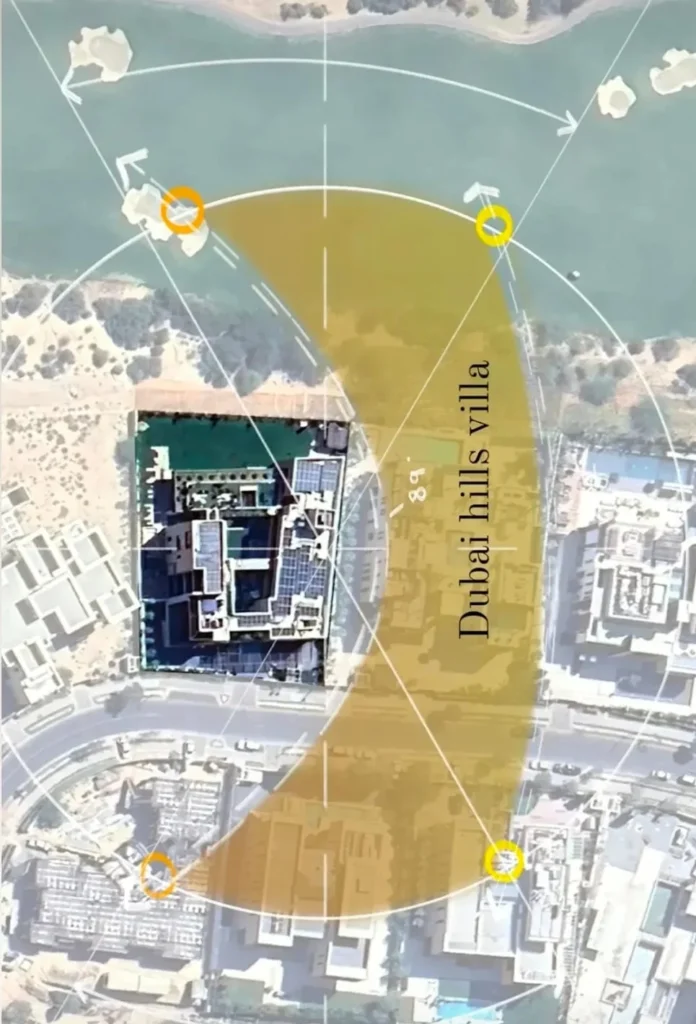
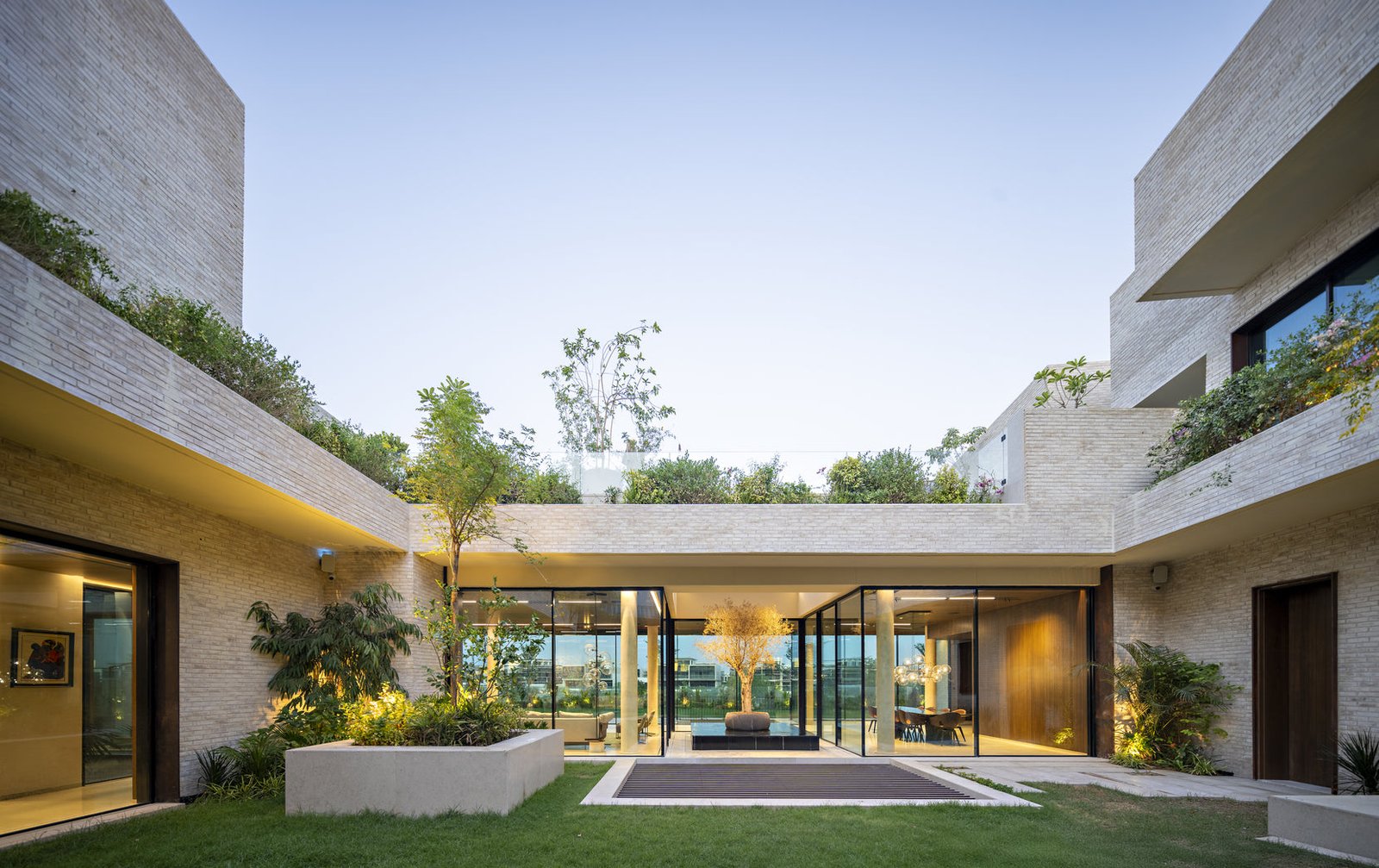
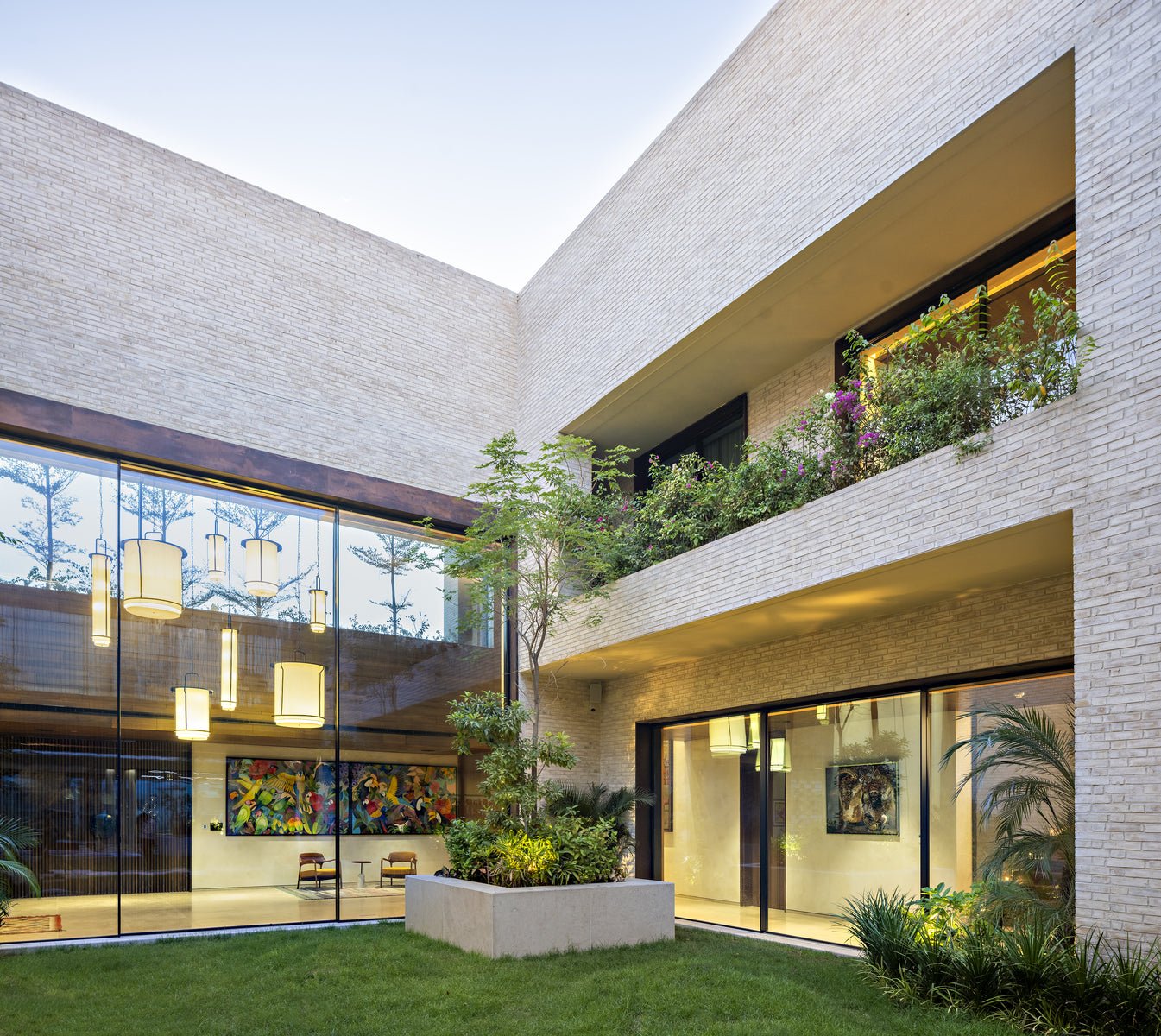
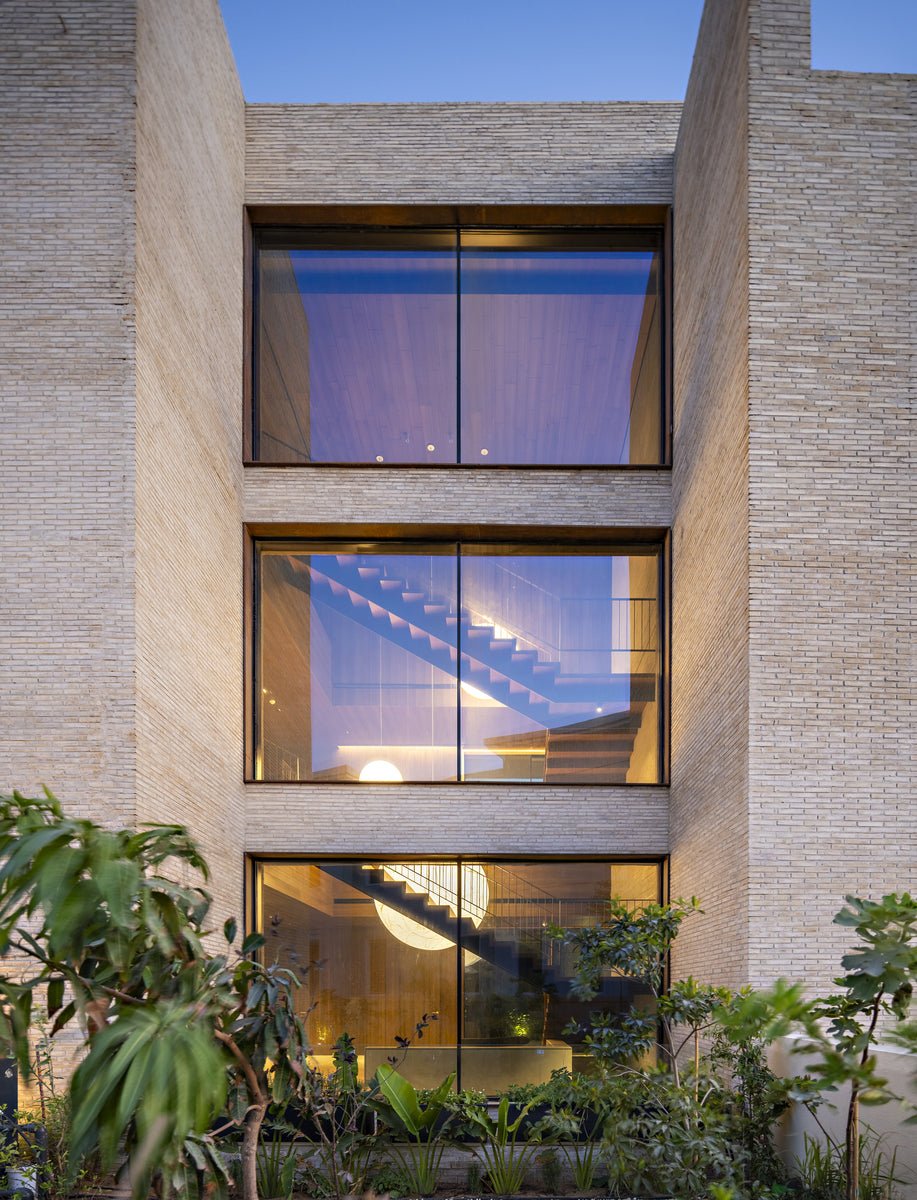
Ishtika is a 35,000 sqft residential project in Dubai Hills, completed in 2025 for an Indian family who wanted a home rooted in Dubai’s landscape while carrying traces of India within it. The design creates a dialogue between two places, bringing together cultural references and a contemporary response to the desert environment.
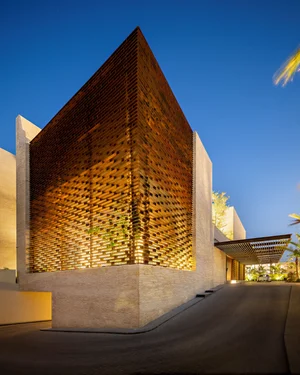
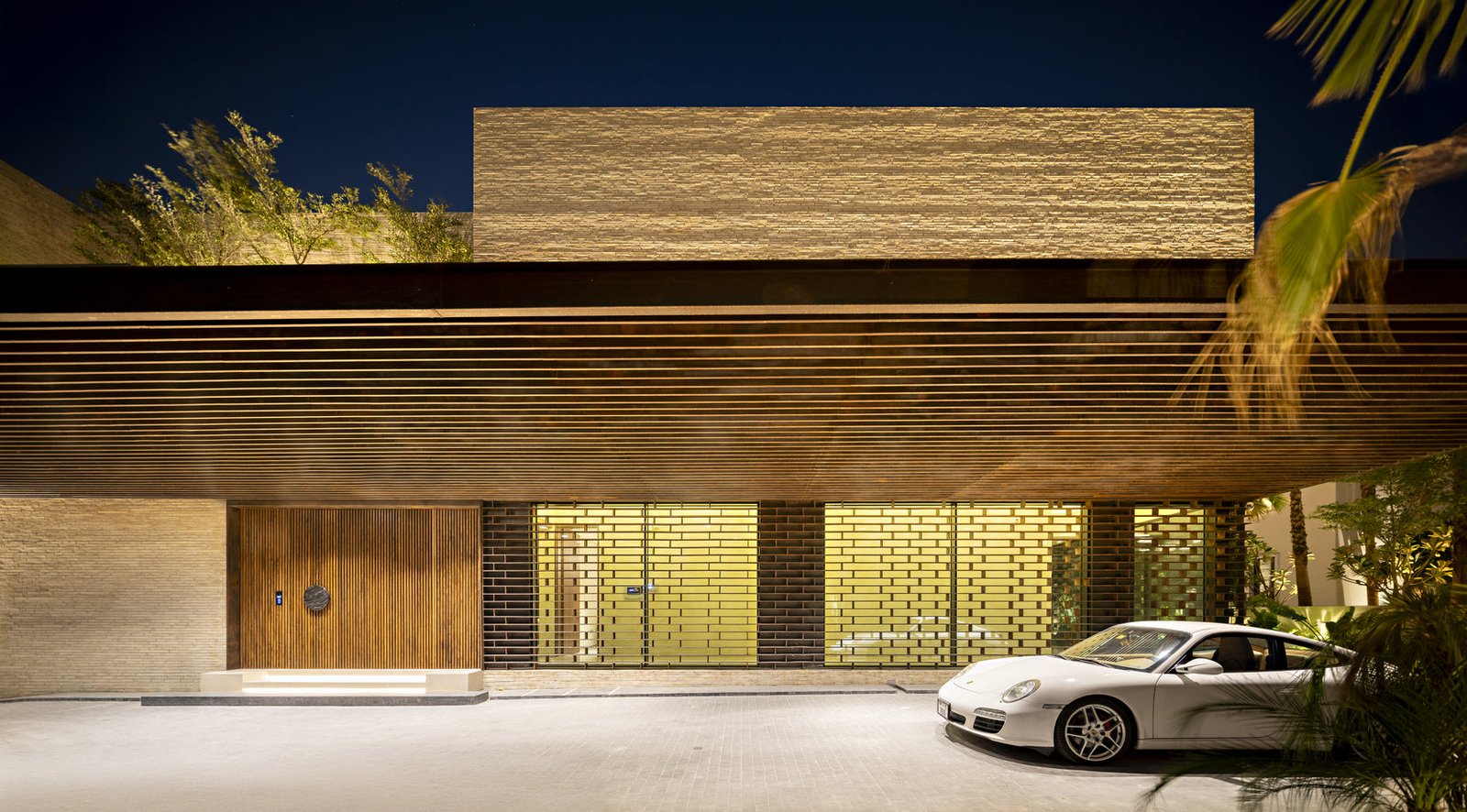
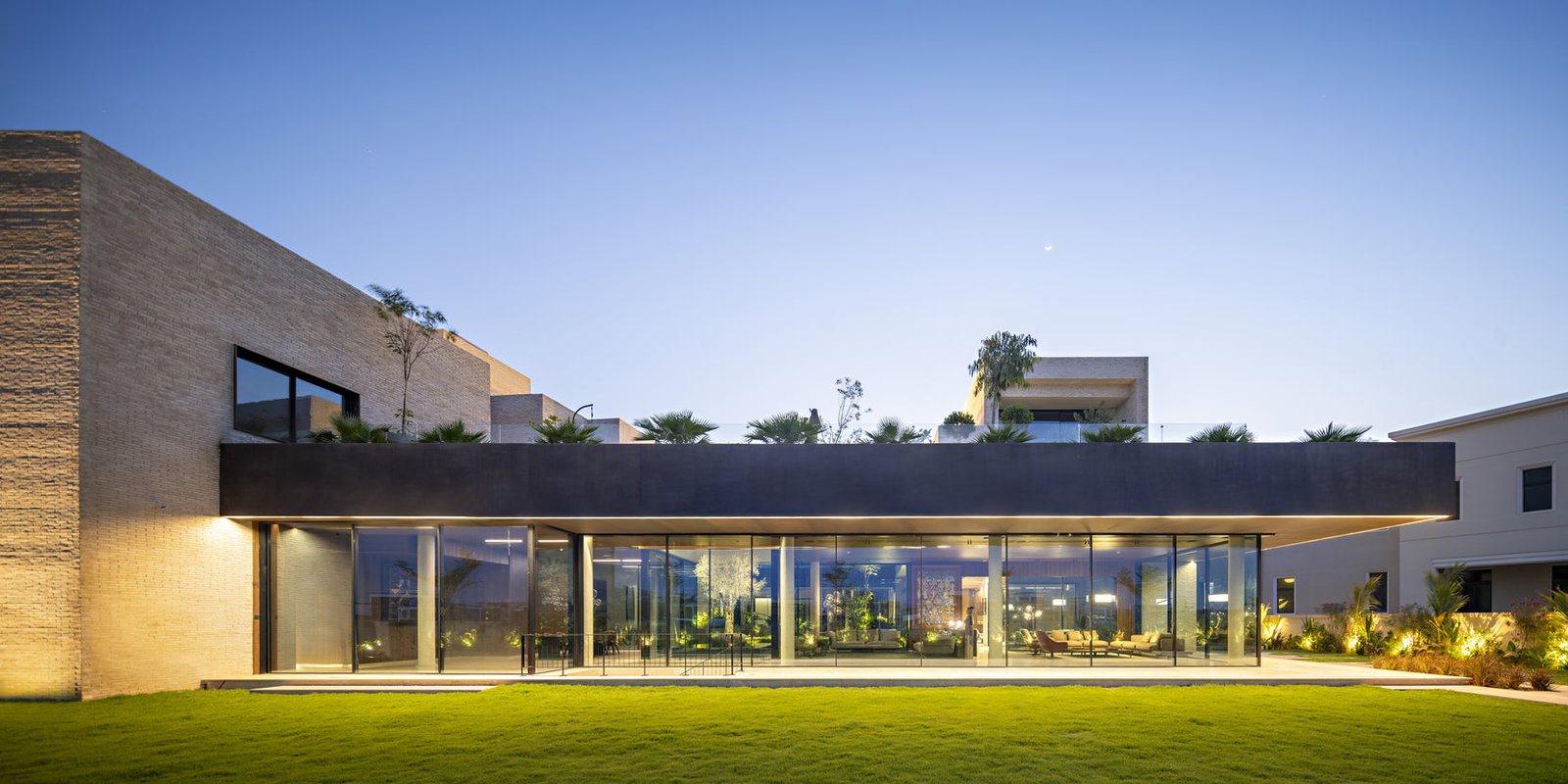
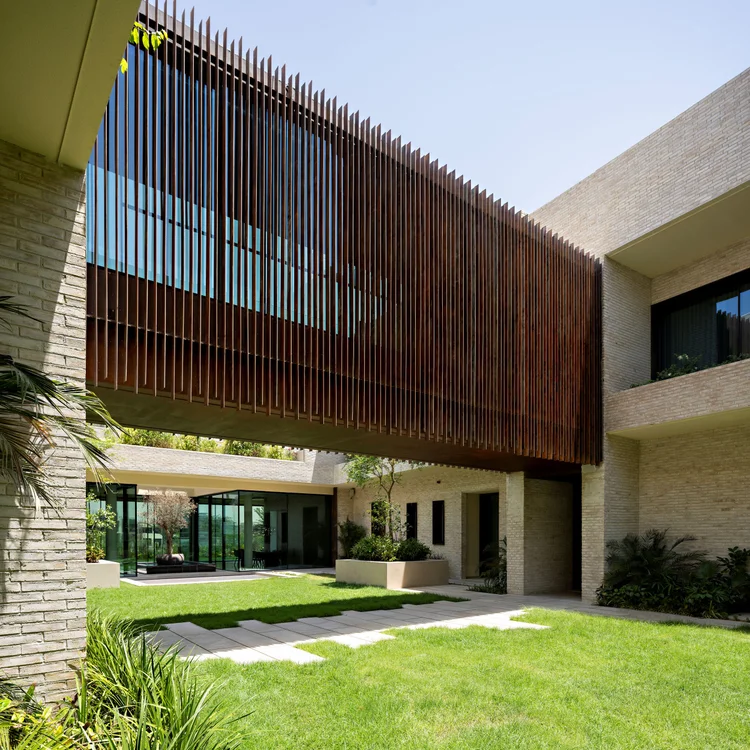
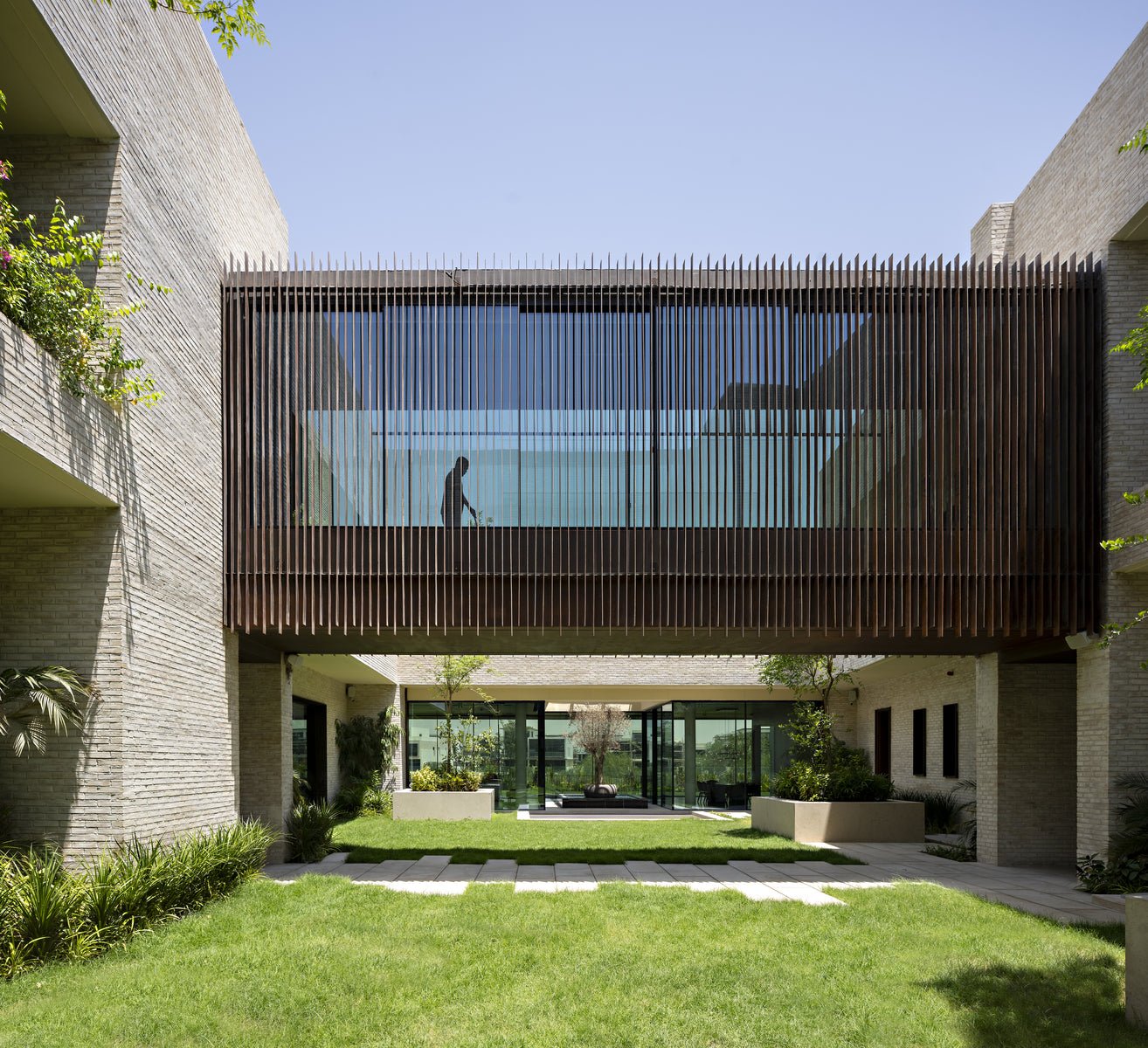
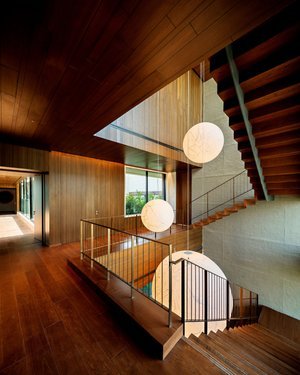
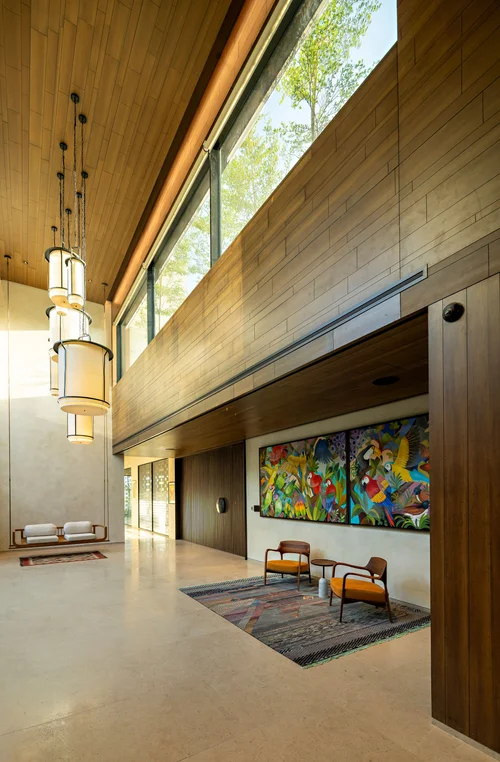
Built around a central courtyard, the house uses sand brick, Corten jaali screens, and a grass-covered roof to soften the desert climate and control light and heat. A triple-height Liwan marks the arrival sequence, while a subterranean Sukhabhumi — inspired by the stepped baodis of Mandu — holds a concealed pool below ground.
Throughout, Indian art and objects sit alongside the architecture as carried memory rather than decoration, making Ishtika a sequence of discoveries shaped by climate, material, and place.
The spaces unfold gradually, with shifting light, shadow, texture, and landscape creating moments of pause and connection. Each transition reveals a new relationship between interior and exterior, allowing the home to remain intimate while responding to its surroundings.